

To overcome self-doubt when tackling a task, first clarify what skills you need to complete it and what you’re already capable of. If, despite having sufficient qualifications, you still experience overwhelming self-criticism, this reaction also requires attention. EMDR self-coaching can address the specific moment when the thought “I’m not good enough for this” is linked to shame, physical tension, and withdrawal. This refers to manageable everyday situations; any missing skills can still be developed through learning and practice.

The fabric is spread out in front of you. You want to sew a simple bag; the instructions are clear, and you’ve done similar seams before. Yet as you lay out the pattern, you think, “Other people can do this. It won’t work for me.” You fold the fabric back up.
You might feel pressure in your chest as you do this. You’d prefer to leave the task to someone who knows how to do it right. Even before a specific problem has arisen, your judgment about your own ability has already pushed the next step aside.
Self-image, ideal image, and how we think others see us
In his description of self-image, Thomas Buhl distinguishes between three perspectives: how you see yourself, how you would like to be, and how you interpret others’ views of you. Especially when it comes to a task, these perceptions can vary widely.
You may see yourself as clumsy. You’d love to be someone who effortlessly creates beautiful things. On top of that, you suspect others would smile at a botched attempt. Amid these thoughts, there’s little room for a simple fact: Even someone who’s still practicing can create something useful.
The starting point, therefore, isn’t to convince yourself that you have the most amazing qualities. You can be more specific. Which seam are you already good at? Which step is new to you? Who could answer this exact question? This way, your self-confidence is tied to an actual task rather than depending on an overall judgment of yourself.
Change the assignment from “Show what you can do” to a doable task
Decide what you really want to accomplish with this project. For the bag, that might mean following a simple pattern and practicing basic sewing techniques. It doesn’t have to be a demonstration of any special talent you may have.
Check the instructions for the part you’re unsure about. If an explanation is missing, look it up. If a procedure is new to you, you can try it out on a scrap piece. This kind of support doesn’t take the challenge away from you. It’s part of learning something on your own.
Also make a distinction between asking for help with a single step and handing off the entire project as a precaution. Just because you need help threading the needle doesn’t mean someone else has to sew the bag for you. Making this distinction gives you some leeway without overestimating your abilities.
Perhaps this factual clarification is enough. If you still want to back away, even though the next step is manageable, we can take a more targeted look at the remaining self-deprecation.
Focus on the moment when you decide not to take on the task
When working on a sewing pattern, the thought “I’m not good enough for this” pops into your head. What happens then? Maybe you’re already feeling ashamed of a result that doesn’t even exist yet. You feel the pressure in your chest and want to push everything away. The task, the thought, the feeling, the physical reaction, and the urge to avoid it all come together in this describable moment.
This is a more specific task than “I need to improve my self-image.” You don’t have to address every insecurity you have about yourself all at once. Nor is it necessary to look for past instances of being belittled. Today’s encounter with this task can serve as a starting point.
In the tutorial, Thomas Buhl guides you from a specifically chosen topic to an awareness of your current emotions and bodily sensations. For self-administered EMDR, a possible topic here would be focusing on the laid-out sewing pattern and its distressing significance. The method is not intended to certify your technical skill; rather, it focuses on your experience during the process.
Bringing Inner Work and Personal Action Back Together
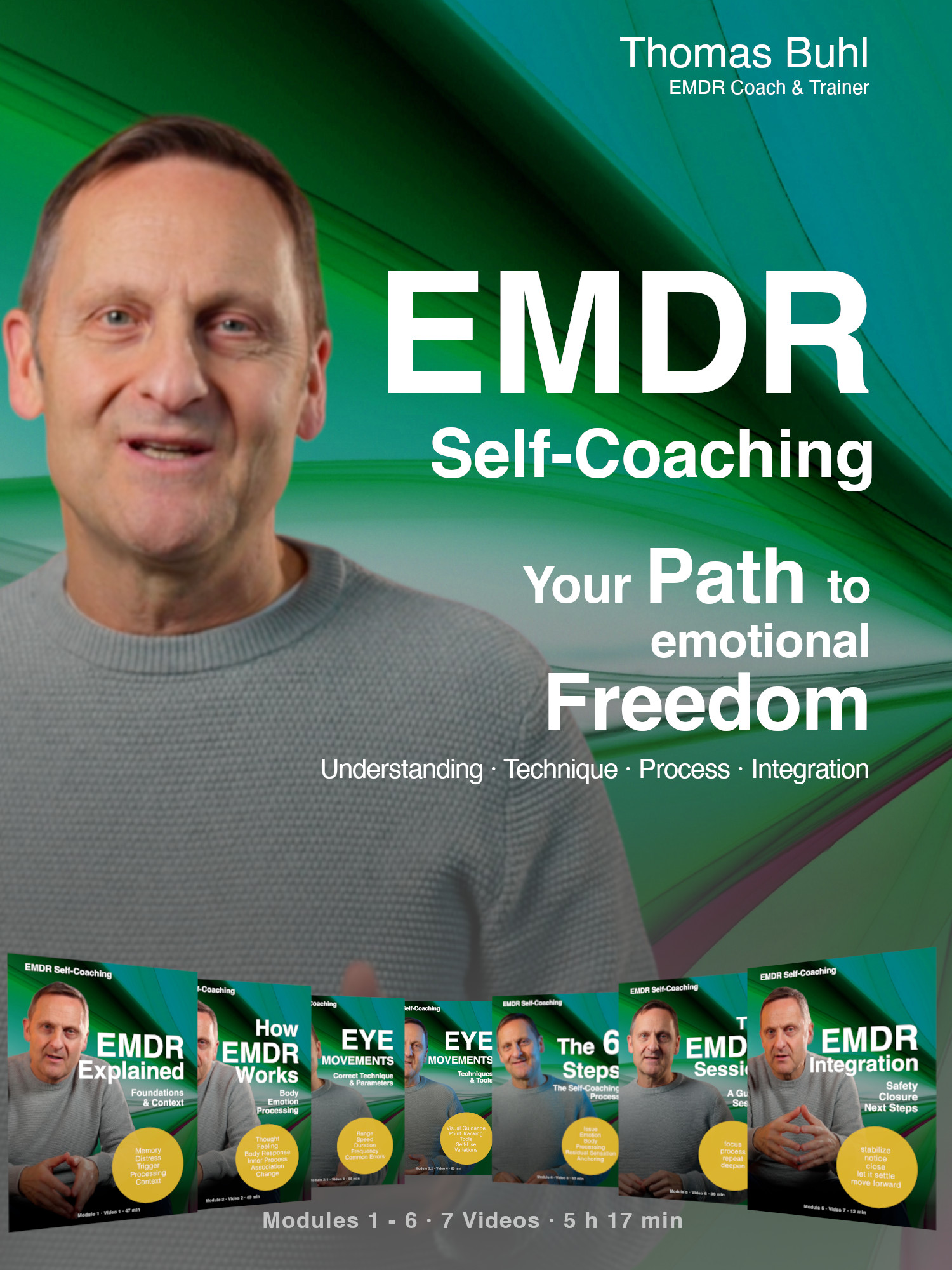
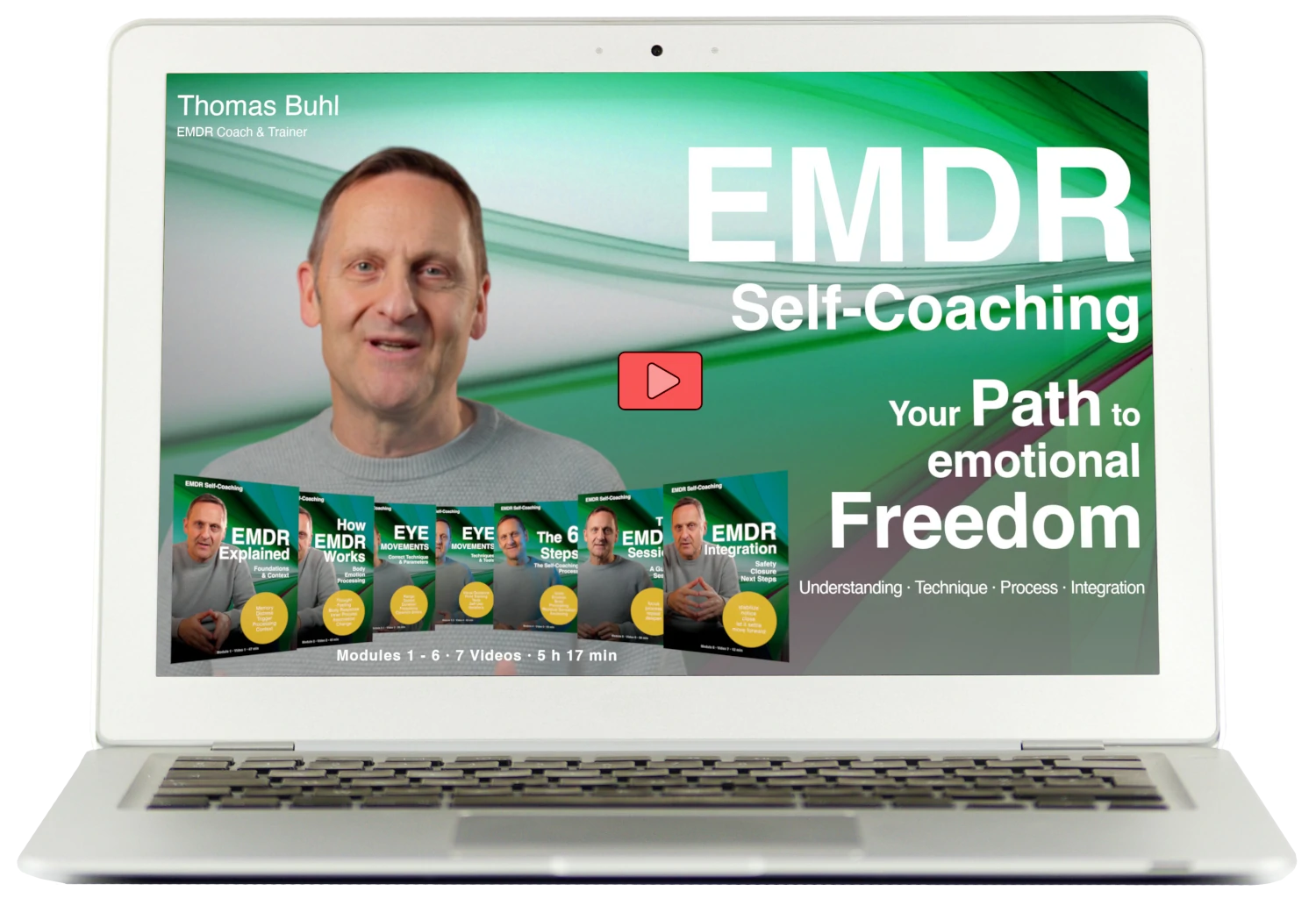
As an EMDR and trauma therapist, Buhl has developed his own structured, six-step self-coaching process. He connects the chosen topic with emotion, body awareness, and bilateral stimulation—primarily guided eye movements. Participants then observe what has changed. A positive assessment should emerge naturally and is not imposed as a mandatory statement.
If you want to use EMDR as a self-help tool, first learn the complete process by following his book or video tutorial. This is intended exclusively for managing limited, non-pathological everyday stressors. If you feel overwhelmed, you can stop the process and seek support. Severe self-deprecation, depressive symptoms, or overwhelming memories require professional guidance.
Once you’ve potentially relieved yourself of that burden, the task itself still lies ahead. Resume the step you’ve clarified and examine its actual outcome. What went well? What needs to be corrected? A crooked seam provides insight into that seam. It does not answer the question of whether you, as a person, are capable enough.
Self-confidence doesn’t require absolute certainty
Getting rid of self-doubt doesn’t mean you have to feel confident about every task right away. You can still feel uncertain and yet distinguish between what you know, what you need to learn, and what you can handle on your own. Asking for clarification or a correction doesn’t undermine that confidence.
If you find yourself wanting to give up again, take a closer look at the specific situation. Has a new challenge arisen, or is it the same self-deprecating thought? You can seek the right kind of help without giving up on your goal too quickly. In the end, what counts is a deeper understanding of yourself: I did this part, I learned this here, and I needed support along the way.