


“No, I can’t help with the move on Saturday.” You said it in a friendly way. Shortly afterward, you want to add: “Maybe I can make it work somehow.” But you know you need that day for yourself. Setting a boundary doesn’t require getting rid of any feelings of guilt beforehand. What matters is whether your “no” fits the actual situation and whether you communicate it clearly. You can deal with your inner reaction afterward separately.

What exactly do you want to reject?
The more clearly you understand your limits, the more clearly you can express them. Is it about having all of Saturday to yourself, an extra task, or someone making plans for your time without consulting you? A general statement like “It’s all getting to be too much for me” then becomes a specific statement.
Be sure to also review what had already been agreed upon. Declining a new request is different from withdrawing a firm commitment. If you’ve already agreed to something and now have to back out, this may involve explaining the change promptly and acknowledging the difficulty that has arisen. This doesn’t make your boundary meaningless; you’re simply handling the consequences responsibly.
Besides, saying “no” doesn’t have to be based on complete exhaustion. You can decide against a request because you’d rather spend your time doing something else. The question isn’t whether your need has become serious enough.
A clear sentence leaves less to the imagination
“I’ll see” sounds like a possible “yes.” If you’ve already decided to say no, a clear answer is fairer. For example: “I won’t be helping out on Saturday. I need the day for my own plans.” A brief explanation is usually enough; you don’t need to keep coming up with more reasons until every possible source of disappointment has been ruled out.
A counteroffer is optional. If you actually want to bring the boxes on Friday, you can offer to do so. If you only say it to get rid of your guilty conscience as quickly as possible, you might end up making another unwanted commitment.
Boundaries relate to what you yourself contribute or do. “I’m not available today” is something you can choose to do. “You mustn’t be disappointed about this,” on the other hand, requires you to dictate the other person’s feelings.
A guilty conscience requires a thorough examination
Perhaps the request was justified, and the other person was looking forward to your help. In that case, disappointment is possible. That doesn’t necessarily prove that you acted wrongly. Take a closer look: Did you break a promise, hurt someone unnecessarily, or neglect a shared obligation? If so, you can take responsibility for that without retracting your “no” entirely.
Or is it mainly the fear that “Now she’ll think I’m selfish”? That’s different from a consequence that has already occurred. You can notice that you’re expecting rejection and wait to see how the other person actually reacts.
If the reason for the refusal is objectively valid, offering another apology won’t necessarily help with the actual problem. Perhaps she’s just trying to put an immediate end to the unpleasant feeling. In that case, the next step is to understand that feeling more clearly, rather than taking on a new commitment.
When a reproachful look lingers longer than the conversation
One possible point of reference is the moment right after you say “no”: the brief silence, the look on the other person’s face, the thought, “I’m being inconsiderate.” Perhaps feelings of guilt and a knot in your stomach come along with it. This way, “I need to finally learn to set boundaries” becomes a specific situation that helps you understand your inner reaction.
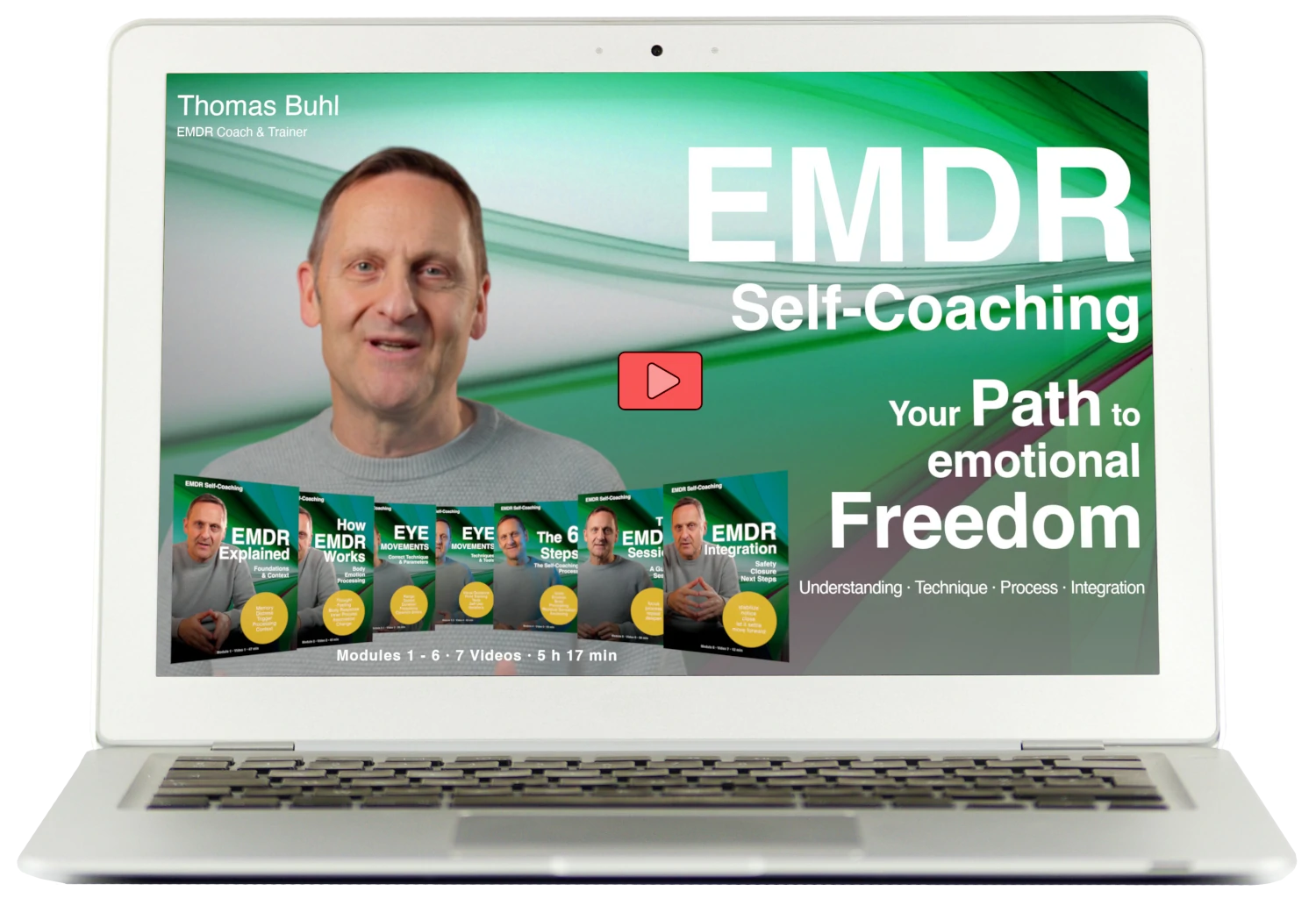
To help people cope with everyday stressors, EMDR and trauma therapist Thomas Buhl has developed his six-step approach to EMDR self-coaching. In this approach, the issue at hand, emotions, and bodily sensations are linked to bilateral stimulation—specifically, guided eye movements. The approach focuses on the distressing experience. Defining your boundaries and clarifying your actual obligations remain your own responsibilities.
If you’re considering self-help with EMDR, it should be used exclusively for limited, manageable, non-pathological stressors in a safe environment. It’s essential to understand the entire process and its limitations. If you feel overwhelmed, you should stop the session and seek support. Severe, persistent symptoms or mental health conditions require professional treatment; self-coaching is not a substitute for it.
The other person’s reaction remains important
It’s okay for someone else to ask for clarification or to be disappointed. However, repeated belittling, pressure, or the continued disregard of your boundaries require more than just inner calm. You can reiterate clearly what you’ve already said. Whether the other person respects that depends on more than just your choice of words.
If you fear threats, violence, or coercion, acting more assertively is not enough to protect you. Seek professional guidance instead of trying to navigate risky boundary-setting conversations on your own. Doing EMDR at home does not make a dangerous situation safe.
After saying “no” to Saturday, you can therefore first check whether your answer is still valid. If so, you don’t have to send the next message right away. You’ve responded to a specific request. Now, in your actual interactions, it remains to be seen how the two of you will handle this response.