


When choosing a restaurant, you say, “Anything is fine with me,” even though you have a preference. At the next get-together, you end up taking charge of the planning again—even though you’d actually wanted to hand it off. Each time you agree to something, it may seem like a small thing. But if you repeatedly go along with what you think others expect of you while putting your own needs aside, this can be described as people-pleasing: a persistent desire to please others, often linked to a desire for recognition or a fear of disappointing someone.

This is about a pattern of behavior, not a diagnosis in and of itself. A few “yes” answers do not indicate a disorder or a specific life story. What is more revealing is what happens before you give your consent and what the cost is to you.
Voluntary consideration allows your wishes to be taken into account
You can be generous, make compromises, and occasionally do something that doesn’t come naturally to you. That’s part of being in a relationship. The question is whether you recognize your own desires and still consciously choose to be considerate.
While you’re eating together, you could say, “Today, your suggestion is more important to me.” This is different from simply agreeing, where you don’t even voice your own preference because the possibility of upsetting the other person already seems unpleasant. From the outside, both might look the same. To you, however, they may feel very different.
Another difference lies in whether you can also say no. Voluntary helpfulness includes this option. If saying “no” feels almost forbidden deep down, even though the situation is safe, it’s worth taking a closer look.
Why Saying “Yes” Right Away Can Be a Relief at First
Perhaps agreeing right away will save you from having to ask for clarification, facing a disappointed look, or having a conversation about differing wishes. For now, there’s peace. It’s only later that you realize you got annoyed or took on more than you intended.
Thomas Buhl describes avoidance as a possible defensive reaction that can also limit one’s scope for action. This question can be cautiously applied to your desire to please others: What does my “yes” make easier right now, and what will it make more difficult later on? This doesn’t automatically explain the cause of your behavior. It helps you examine its function in a specific situation.
One possible short-term relief would be not having to deal with conflict. The price you might pay later could be a packed schedule or the feeling that you’re barely making any headway in living up to your own expectations. This is about your observable experience, not a fixed trait of your personality.
Compare different situations instead of judging yourself
Think of two or three everyday situations in which you said more or less than you intended. Briefly note the following for each one:
- What was actually asked of me or expected of me?
- What would I have wanted for myself?
- What reaction was I afraid of?
- What did I do, and how did I feel afterward?
You might realize that you tend to give in, especially to a certain person. Perhaps this pattern shows up in many of your relationships. Or you might notice that no one actually asked for your help: you simply anticipated their expectations. These distinctions are more helpful than the blanket statement, “I’m just a people pleaser.”
Also look for counterexamples. Where can you already freely agree or disagree? What’s different in those cases? This will give you a clearer picture that also takes your existing options into account.
Expected rejection is not the same as actual pressure
An automatic “yes” may be linked to a desire for recognition or a need for harmony. It may also stem from past experiences. However, you don’t need to find a childhood cause for this, and you shouldn’t retroactively attribute trauma to this pattern.
Also consider your current circumstances. Financial dependence, specific obligations, or credible threats are real constraints. If you give in under pressure, it’s not simply a matter of needing more courage to say no. In cases of intimidation, control, or violence, professional counseling is more important than practicing how to assert your own wishes.
If, on the other hand, you expect rejection above all else, you can distinguish that expectation from the actual response. A brief moment of confusion doesn’t necessarily mean the end of a friendship. You can’t tell what the real consequences will be based solely on your sense of guilt.
A single situation emerges from the recognized pattern
Maybe you’ll now notice the moment when someone looks at you questioningly while choosing a restaurant. Even before you answer, you think, “Don’t overcomplicate things.” You feel uncomfortable and don’t voice your preference. This moment is a concrete starting point for further clarification. Trying to change the entire pattern all at once, on the other hand, would be a huge undertaking.
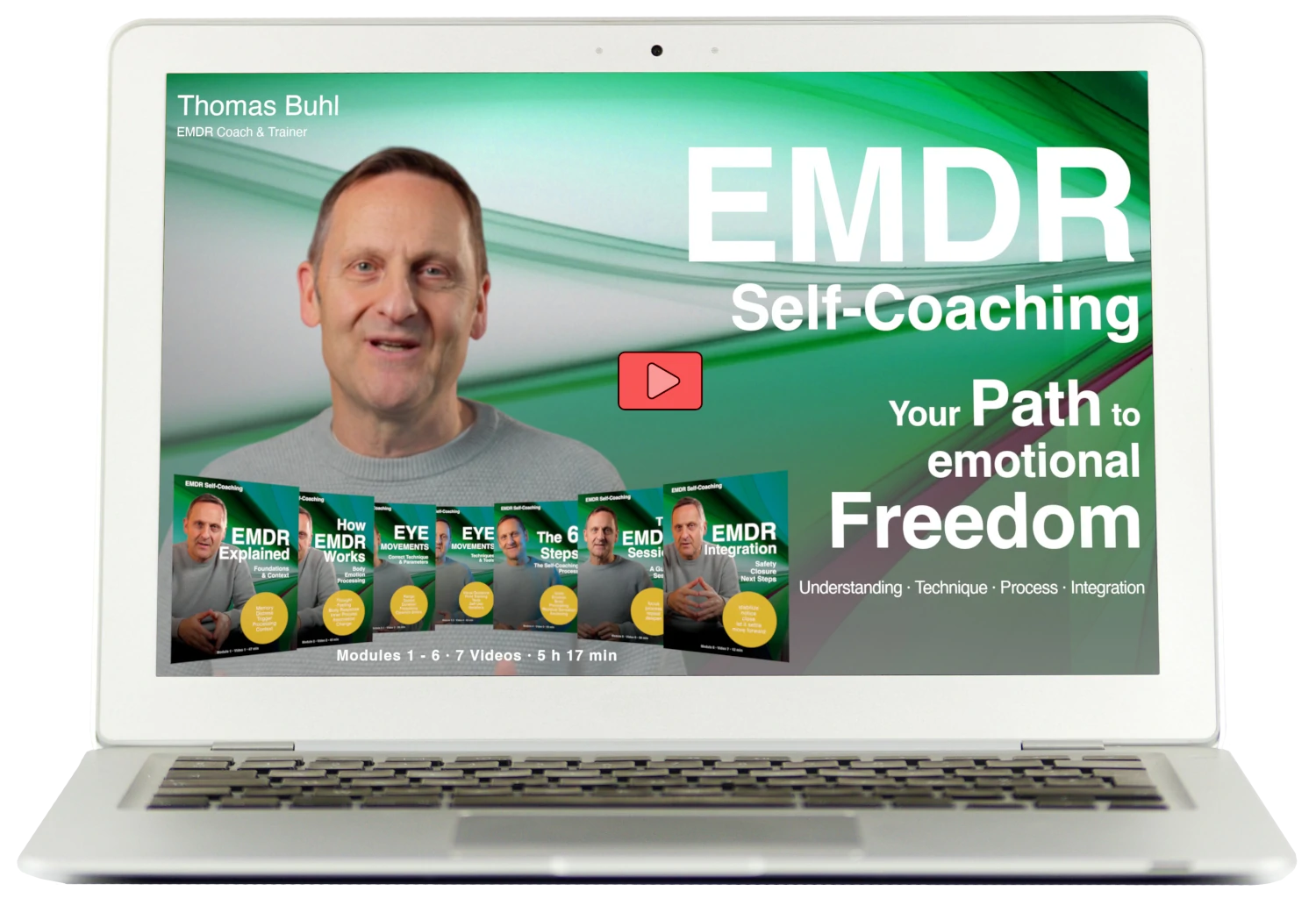
EMDR self-coaching may be considered, at most, for such a limited internal reaction—provided it is manageable, non-pathological, and the situation is safe. It is not a specific method for diagnosing or universally eliminating people-pleasing behavior. Anyone who wishes to use it needs to complete the entire learning program and pass an appropriate aptitude test. In cases of severe distress or uncertainty, professional guidance is more advisable than attempting to resolve everything on one’s own.
To start with, you can simply make your own preference known: “Let me just think for a moment about what I’d like to do.” This doesn’t commit you to either disagreeing or agreeing. It adds something to your response that’s often missing when you’re rushing to please others: your own perspective on the situation.