


If you find yourself ruminating at night and can’t seem to wind down, an everyday experience may still be weighing on you emotionally and physically, even though you’ve long since come to terms with it intellectually. Instead of continuing to search for the perfect answer, it’s worth taking a closer look at the feelings and tension associated with that thought. EMDR self-coaching offers a possible approach to addressing this stress when it comes to manageable, everyday issues.

You flip the pillow over. The other side is cooler; maybe it’ll be better now. For a moment, there’s silence. Then you’re back to that sentence you said today. Was it too harsh? Should you have phrased it differently? You go over the conversation again. And again. By now, you know pretty much exactly what you could say tomorrow. Still, you can’t stop thinking about it.
Then you look at the clock. Now you’re even more annoyed that you’re still awake. You have to function tomorrow. What started as an uncomfortable conversation has turned into a whole night of arguing with yourself.
That’s exactly what makes late-night ruminating so exhausting: You’re trying to find a solution, but going over it in your head again and again hardly brings anything new to the table. Maybe you figured out what happened a long time ago. It just doesn’t feel like it’s over yet.
You get it. So why are you still thinking about it?
A distressing experience is more than just what happened. There’s the conversation. There’s your thought about it: “I let him down.” And there’s what you’re feeling in the moment: maybe guilt, anger, or insecurity. As you think about it, your stomach might tighten. Your jaw tightens. Only now do you realize how tense you’ve been lying there.
This connection is important. If you focus only on the words in your head, it’s easy to overlook just how much the issue is affecting you emotionally and physically. You can rationally explain that a clumsy remark isn’t the end of the world. But the hurt or the guilt may still be there.
That’s how an everyday experience can keep capturing your attention, time and again. You remember it, feel that unease again, and start thinking about it all over again. Maybe you’re still looking for a better explanation or the perfect answer. But at some point, you’ve run through all the arguments. What continues to weigh on you can’t necessarily be changed by just one more argument.
Saying “Just stop it already” doesn’t make it any easier
Of course, at some point you just want to shut off the thought. But then you lie there and ask yourself: Is it gone yet? Am I calmer now? Why am I thinking about it again? On top of the original issue, there’s the added struggle of trying to get your mind under control. Deliberately trying to suppress thoughts as you fall asleep can make it even harder to fall asleep.
Even an encouraging “It’s not that bad” doesn’t have to resonate with you on a deeper level. Maybe you already know that. You don’t need anyone to lecture you on how unreasonable your anxiety is.
Another question might be more helpful: What is it about this thought that’s weighing on me right now? The phrase “I should have reacted differently” might be linked to frustration with yourself. Or to worry that you’ve hurt someone. That’s more specific than “My mind won’t stop.” You’ll realize what you’re actually focusing on.
You don’t have to dissect your entire past or find some hidden cause. For now, it’s enough to simply acknowledge what’s there right now. Maybe it will just remain a sense of unease that’s hard to describe. You don’t have to fabricate a feeling if you can’t name one.
Approaching a Difficult Topic in a Different Way
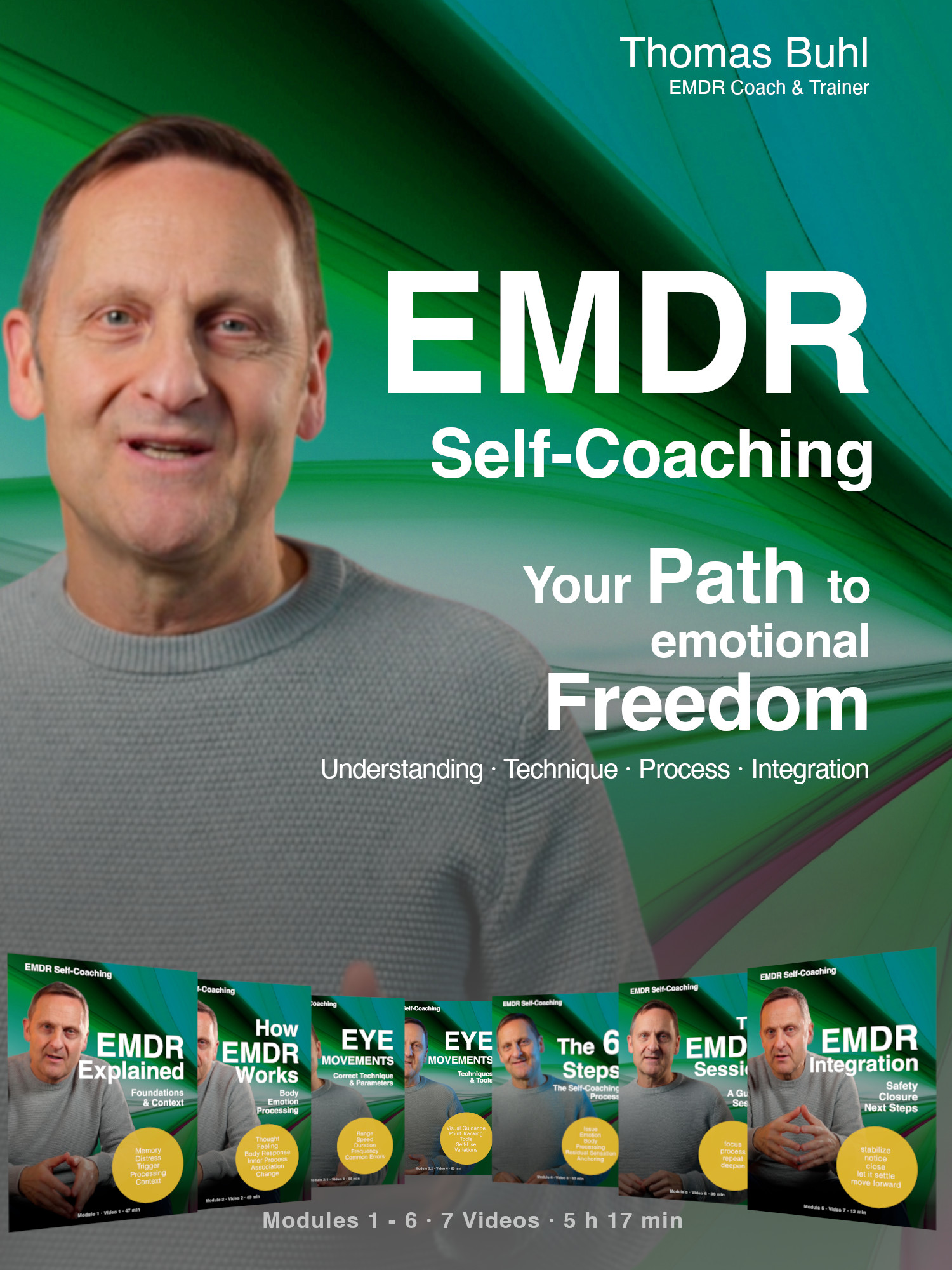
This is where EMDR self-coaching comes in. It integrates the thought, the associated emotion, and the physical sensation. In a structured process, the currently distressing issue is linked to bilateral stimulation —in REMSTIM, primarily through guided eye movements from left to right.
The six steps provide guidance for this: You identify your topic, then become aware of the associated emotion and physical sensation. This is followed by processing the issue using rapid eye movements. Afterward, you pay attention to any remaining sensations and anchor a positive thought that arises. So you don’t need to come up with a friendly response to your problem in advance.
The approach aims to change the emotional and physical strain associated with the issue. The conversation itself remains a fact. Maybe you’ll still want to clarify something tomorrow. But you’re working on how much it still affects you right now. Necessary daily actions and the inner processing of the situation can coexist.
Instead, focus on manageable, everyday topics that allow you to step back and calm yourself down again. Take your time to familiarize yourself with the process using the complete guide. A sleepless night is not the time to tackle a major issue for the first time under time pressure. If something feels overwhelming, stop the exercise and seek support. Traumatic or highly distressing content belongs in the hands of professionals.
EMDR self-coaching is not a treatment for sleep disorders. If you have been sleeping poorly for an extended period of time or are significantly affected by it during the day, consult a doctor to determine the causes. For insomnia , targeted treatment—primarily cognitive behavioral therapy for insomnia—is recommended.
A small next step
To start, you can take a quiet moment during the day and write down the following sentence: “When I think about …, I find myself particularly preoccupied with …” Add what feeling goes along with it and whether you notice anything in your body. This will give you a starting point for a later, consciously chosen self-coaching session or a conversation with a coach.
And if that thought comes up again tonight, you don’t have to turn it into a new task to resolve everything right away. You can address the issue when the time is right. It deserves your attention. It doesn’t have to be completely resolved tonight.