

The document is open. You have a rough idea of what to put in it. Nothing has been written yet, but as you look at the blank page, a thought already crosses your mind: “I won’t do this well enough.” Maybe you feel a tightness in your chest. You close the file before you’ve even written the first sentence.
And yet you were just about to get started. In the few seconds between opening the document and starting to write, something changed: even before you’ve written a single sentence, you’re already worried that you won’t be good enough. It’s precisely this transition that deserves your attention. To navigate it, you first need some practical guidance—not a whole new plan for your entire life.
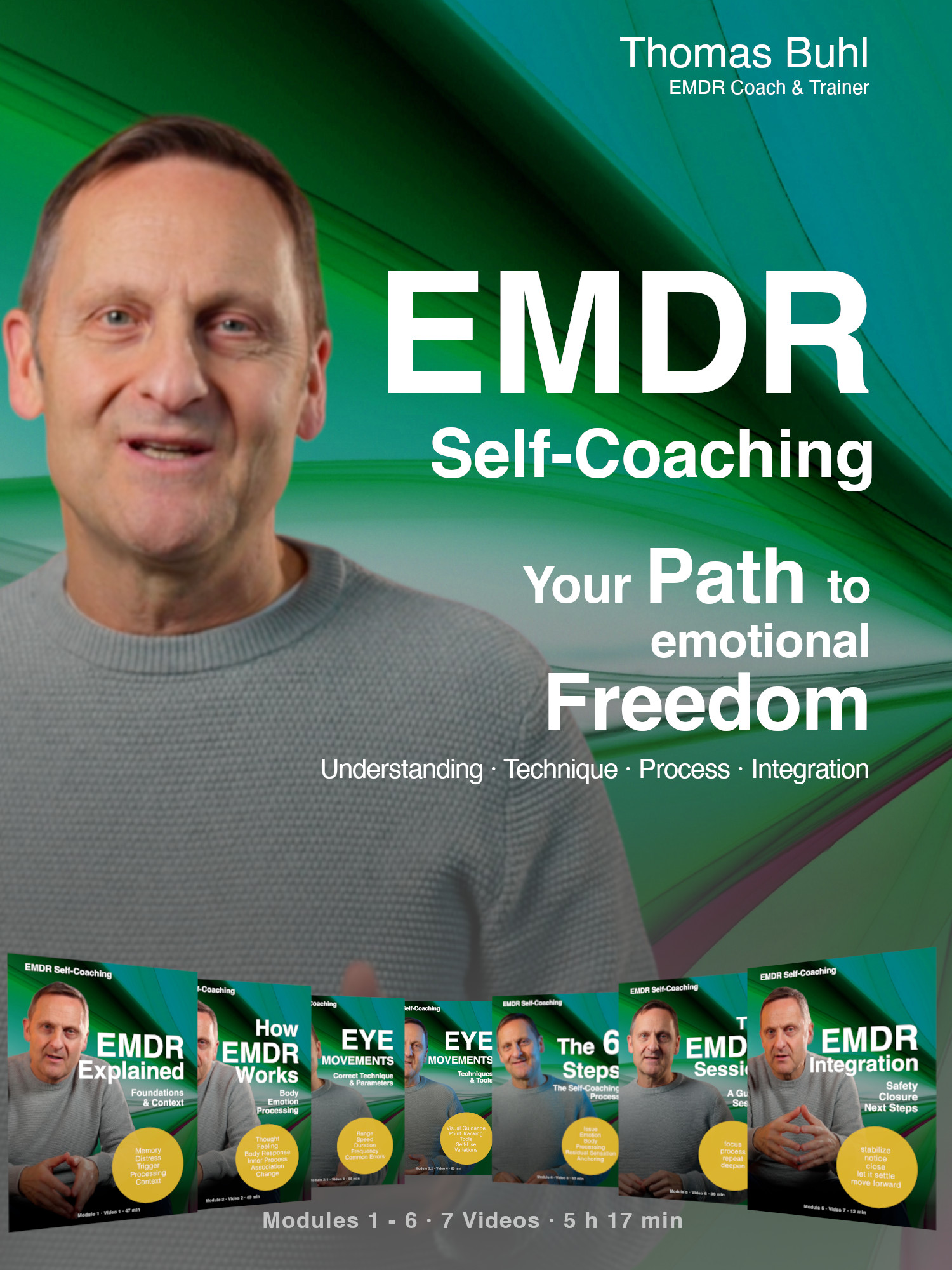
In his book *EMDR Self-Coaching in Six Steps*, Thomas Buhl describes how trying to avoid unpleasant feelings can limit one’s actions. Applied to the blank document, this means: Perhaps you’re already avoiding the expected evaluation before you’ve even started writing. This is one possible explanation for this situation—not a universal cause of every case of writer’s block.
So first, check to see if there’s anything you’re missing for the next step: resources, clarity, undisturbed attention, or rest. If the step is feasible but you still experience a distressing internal reaction, you can examine it more closely. For limited, non-pathological everyday issues, EMDR self-coaching is also an option.

What exactly are you missing right now that’s keeping you from getting started?
Take a moment to pause and identify the next action you should take. “Finishing the text” involves many steps. “Jotting down the first piece of information as a keyword” is something you can check right away. This will help you see if anything is missing or if even this small task is already feeling overwhelming.
- A practical obstacle: A file, access, or necessary information is missing. Take care of that first; without it, you may not actually be able to start the task.
- Lack of clarity: You know the desired result, but not the next step. Describe it more precisely or ask for an explanation.
- Habit: You automatically open something else. Set that distraction aside for your first attempt and see if that helps you get started.
- Fatigue or burnout: You’re exhausted or are currently facing more demands than you can handle. In that case, rest, a break, or a new priority may be necessary.
- Emotional block: The next step is feasible, but as you approach it, you feel a burdensome sense of expectation or a clear sense of resistance. You can take a closer look at this moment.
Several points may apply at the same time. A slow start does not necessarily indicate a problem. Even a task you don’t enjoy doesn’t automatically mean there’s an underlying block.
The first sentence can still be incomplete
With an empty file, an additional expectation can arise without you realizing it: even the very beginning should look as if the task were already complete. Then, mentally, you’re already facing the entire result, even though you’ve only just begun your first attempt.
Start by writing down a factual keyword that belongs in the text anyway. It doesn’t need to be beautifully phrased just yet. You can turn it into a sentence later. So you don’t have to know exactly how the final text will sound when you write down the first keyword.
Maybe that will help you make progress. Then you can just get to work. You don’t have to find an emotional cause first or establish complete certainty. However, if the resistance is already clear when you hear a single keyword, that’s a more accurate observation than “I can’t get anything done.”
Pay attention to the moment you step back
What makes this next step feel uncomfortable? Maybe you’re looking at the blank page and expect your text to be useless. Maybe you’re already thinking of someone who might read it. What matters is whatever thought actually comes to mind right now.
Also note what happens after you close the file. Does the unease subside for a moment? If so, avoiding the situation may have created some distance from the stressful expectation, even as the task remains unresolved. This observation may explain why simply making a new resolution isn’t enough: the next time you open the file, you may encounter the same expectation again. You don’t need to infer a deeper cause from this, nor do you need to look for such a reaction within yourself.
Keep it simple: “When I look at the blank page, I think I won’t do a good enough job. I feel insecure and notice a sense of tightness.” If you don’t notice any physical sensations, that’s part of the observation, too. You don’t need to add anything to make the description sound complete.
The initial idea becomes a specific topic
The tipping point makes the topic tangible: the open file, your expectation, and the experience just before closing it. This limited scene serves as a possible point of reference for inner work. You turn your attention to what actually emerges as you approach the task. This neither identifies the cause of all initial difficulties nor implies a mandate to eliminate them all at once.
EMDR and trauma therapist Thomas Buhl has developed his own six-step process for self-administered EMDR. As he explains in his book and tutorial, the first step involves becoming aware of the issue, the emotion, and the physical sensation. In the complete process, these are combined with bilateral stimulation, particularly rapid eye movements. Afterward, you examine what has changed in your experience. Body awareness is part of this observation; it does not prove that the body is causing your initial difficulty.
If you want to use EMDR on your own, learn the complete process by following the instructions or watching the video tutorial, and be sure to review the guidelines regarding suitability. Set aside enough time for each session. Self-coaching is not an additional requirement you must fulfill before each session.
EMDR self-treatment is appropriate here for limited, non-pathological everyday issues. You should be able to maintain some distance from the issue and regain your composure. If you feel overwhelmed, stop the session and seek professional help. Traumatic experiences or mental health conditions require professional support.
Back to the open file
Whether you started by removing a practical obstacle or by addressing your emotional reaction: The next attempt will show you what’s possible now. Open the file and write down that one keyword. See if you can stick with this activity without immediately having to judge the entire result. A sense of relief and an actual written note are two different things. Even if it’s easier to get started, that doesn’t mean anything about how the next task will go.
If that doesn’t work, don’t immediately increase the pressure. Maybe you need specific guidance or a break. Recurring, severely limiting initial difficulties warrant a professional evaluation. For now, a visible starting point is enough: a keyword that can remain on the page.