

If procrastination is taking an increasingly heavy emotional or mental toll on you, it’s worth taking your own limits seriously. It’s also crucial to consider whether you still feel you can handle the situation on your own. EMDR Self-Coaching can address manageable, non-pathological emotional states related to a specific reaction, such as shame over falling behind. If you feel you can no longer help yourself, it makes sense to seek support from a professional.

Another task has been left undone. At first, it annoys you. But now, even when you’re doing something else, you can’t stop thinking about the backlog. You resolve to start fresh tomorrow, and at the same time, you realize just how much energy this resolution is already costing you.
Perhaps it’s less the unfinished task itself than what you’ve come to associate with it: self-reproach, shame, or the fear of getting stuck again. If so, this emotional burden also deserves your attention.
When does procrastination become a bigger problem?
A difficult day or a postponed plan doesn’t necessarily have to be a cause for concern. However, it makes a difference whether you can pull yourself together after a disappointment or whether the emotional strain gradually takes over.
At first, you might have been able to set the task aside for the evening. Now you find yourself thinking about it even while you’re eating and berating yourself, even though you can’t work on it right now. Your frustration over an unfinished task is turning into something that’s taking up more of your day. This change is worth taking a closer look at. What matters isn’t whether someone else would find the task easy, but how stressful the situation feels to you.
Perhaps the ways you usually use to relieve your stress just aren’t enough right now. Or maybe you simply feel, “I don’t know how to get out of this on my own anymore.” You don’t have to ignore that feeling just because the problem seems small from the outside.
The key is to be mindful of how you treat yourself. If the stress persists, intensifies, or significantly interferes with your daily life, an underlying medical condition may be a factor. You can’t tell that just by looking at procrastination alone. A professional can help you make sense of it.
What you’re willing to ask of yourself during self-coaching
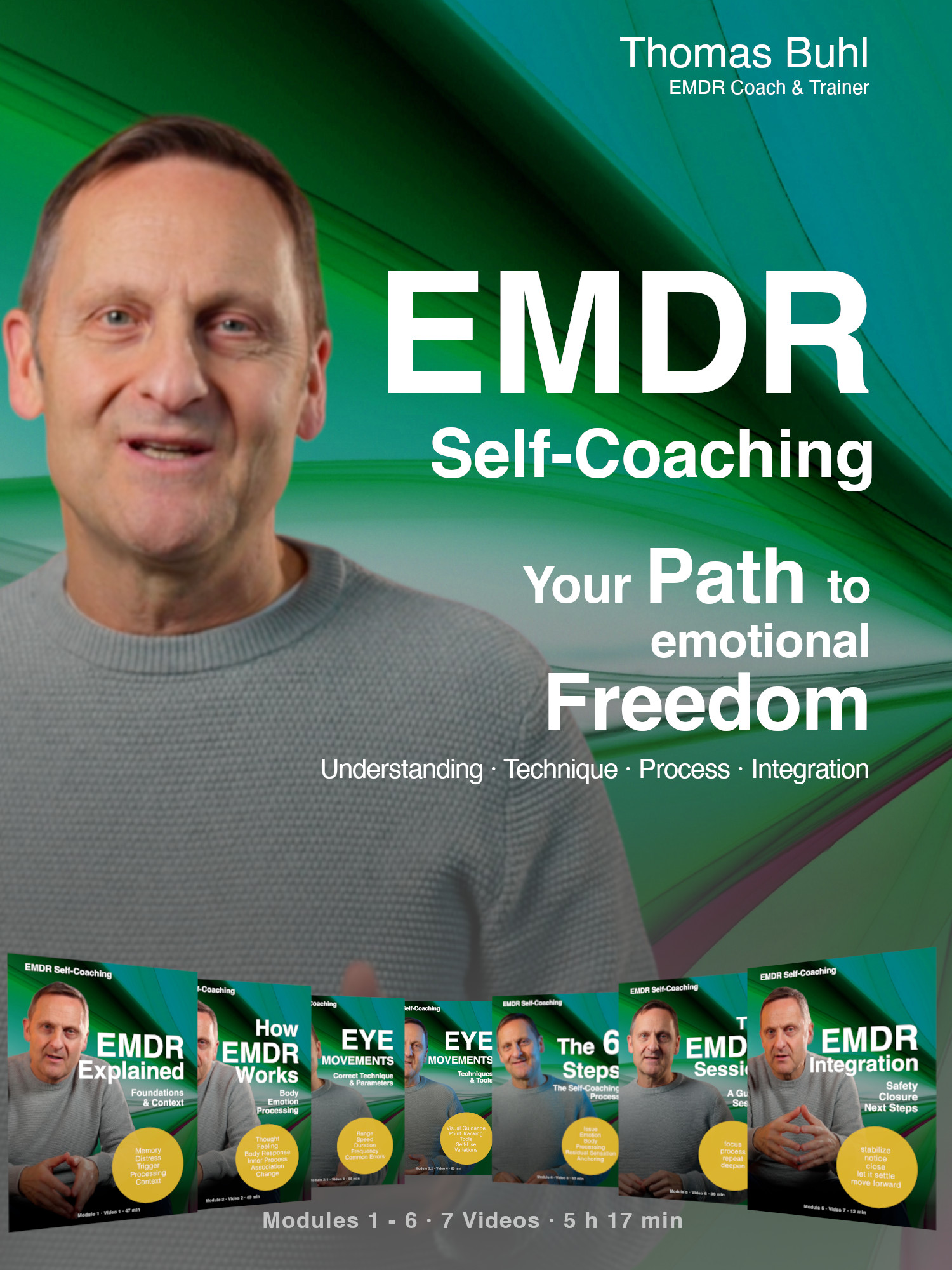
EMDR and trauma therapist Thomas Buhl has developed his own six-step self-coaching approach. It is intended exclusively for non-pathological emotional states. That’s why his book and tutorial include the question of whether you want to address an issue on your own and whether you feel stable and resilient enough to do so.
When your daily workload is manageable, even a single unfinished task can become an issue: You think, “I should have taken care of that a long time ago,” feel ashamed, and notice tension. The inner work focuses on this limited reaction. It is not intended to solve all your difficulties with procrastination at once.
“Manageable” doesn’t mean you just have to pull yourself together enough. It’s also about whether you can focus on a single moment and then let it go. Do you feel resilient enough today? Do you want to address this issue on your own, by your own choice? If you’re unsure, you don’t have to judge whether you’re ready on your own.
If you want to use EMDR on your own, you’ll need to have fully mastered the process and choose a topic that you can handle. You can take a break or stop. If the experience feels overwhelming, that doesn’t mean you should push yourself even harder or continue on your own. Self-coaching is not a substitute for necessary treatment.
Accepting support is part of taking good care of yourself
You don’t have to exhaust all options for self-help before you allow yourself to seek support. It’s enough to recognize that your own resources aren’t sufficient right now.
Having a conversation together can help you make sense of the situation at first: What exactly is still unresolved about the task, what’s weighing on you about it, and what do you need right now? Maybe you just need some practical help to lighten the load. Maybe you’d like to talk through your inner reaction with someone instead of dealing with it alone. You don’t have to be able to fully explain your situation just yet. Even saying, “I’m just stuck right now,” is a perfectly understandable place to start.
So the question might be: “What can I handle on my own right now, and where do I need support?” This assessment may change over time. Taking it seriously means acknowledging your strengths and allowing yourself to receive the support you need at this moment.